

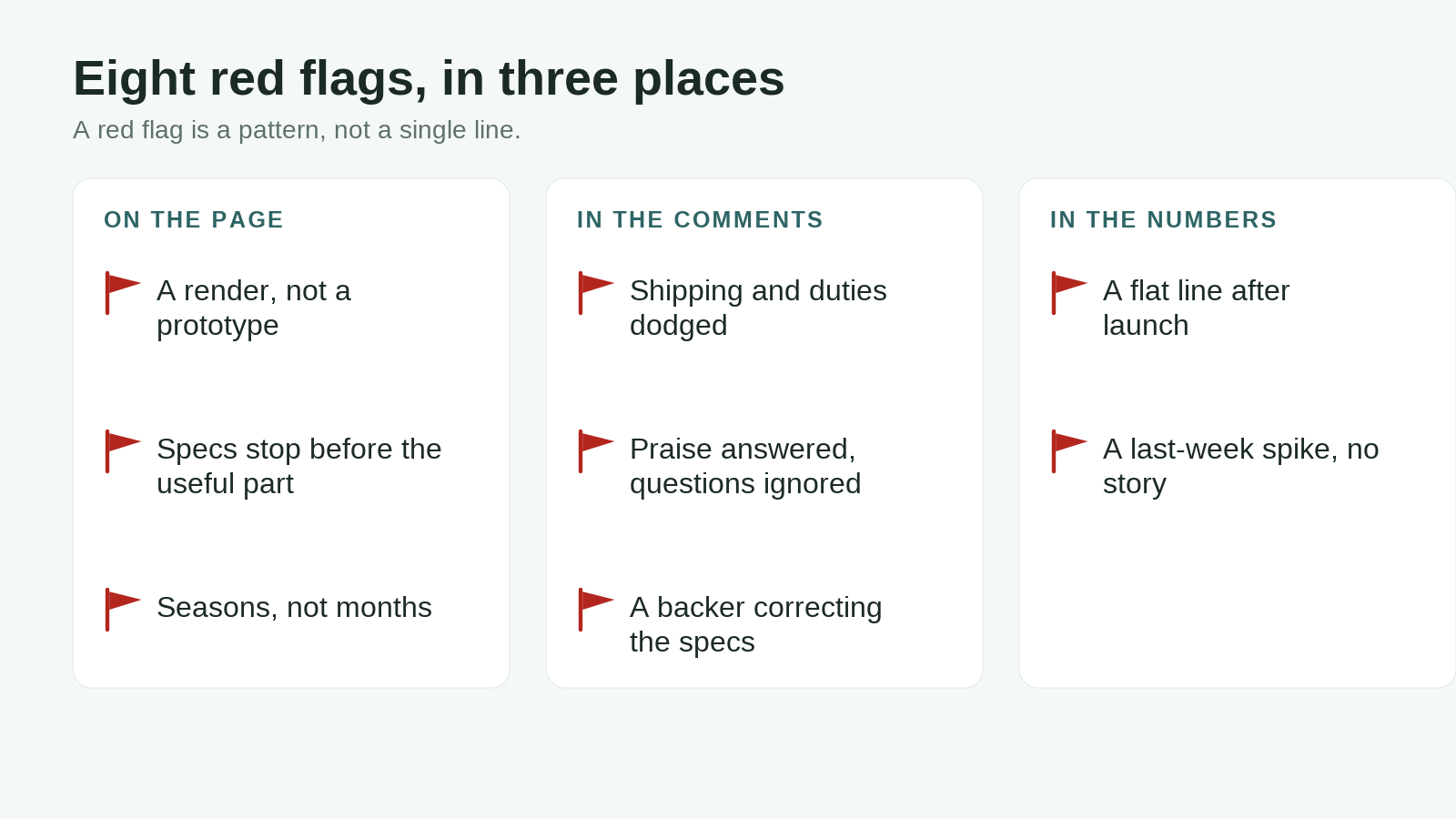
A Kickstarter red flag is rarely a single alarming line. It is a pattern: the same question dodged twice, a render where a prototype should be, a delivery date that moves from month to season. We read campaigns for a living, so the list we actually use is short.
On the page
A render where a prototype should be. Every campaign needs a video; not every video shows a unit that exists. Look for hands, seams, a plug, a screen that turns on. If the only evidence is a 3D animation, the manufacturing question is still open.
Specifications that stop at the interesting part. Dimensions, materials, battery life, compatibility, certifications. A missing spec is not a lie, but it is a decision made without information, and the comments will be full of people asking for it.
A timeline with seasons instead of months. "Q2 next year" is not a delivery date. A creator who has shipped before usually names a port and a month, because they know what the schedule looks like.
In the comments
Shipping and duties dodged. Ask once, read the reply. "We are working on it" after the campaign has funded is a warning; after the page promised worldwide shipping it is a bigger one.
Praise answered, questions ignored. Read who gets replies. A thread where every compliment gets a thank-you and every compatibility question gets silence tells you how the next four months will go.
One backer doing the work. When a single backer has corrected the creator on measurements, compatibility or customs three times, the page is not the source of truth anymore.
In the numbers
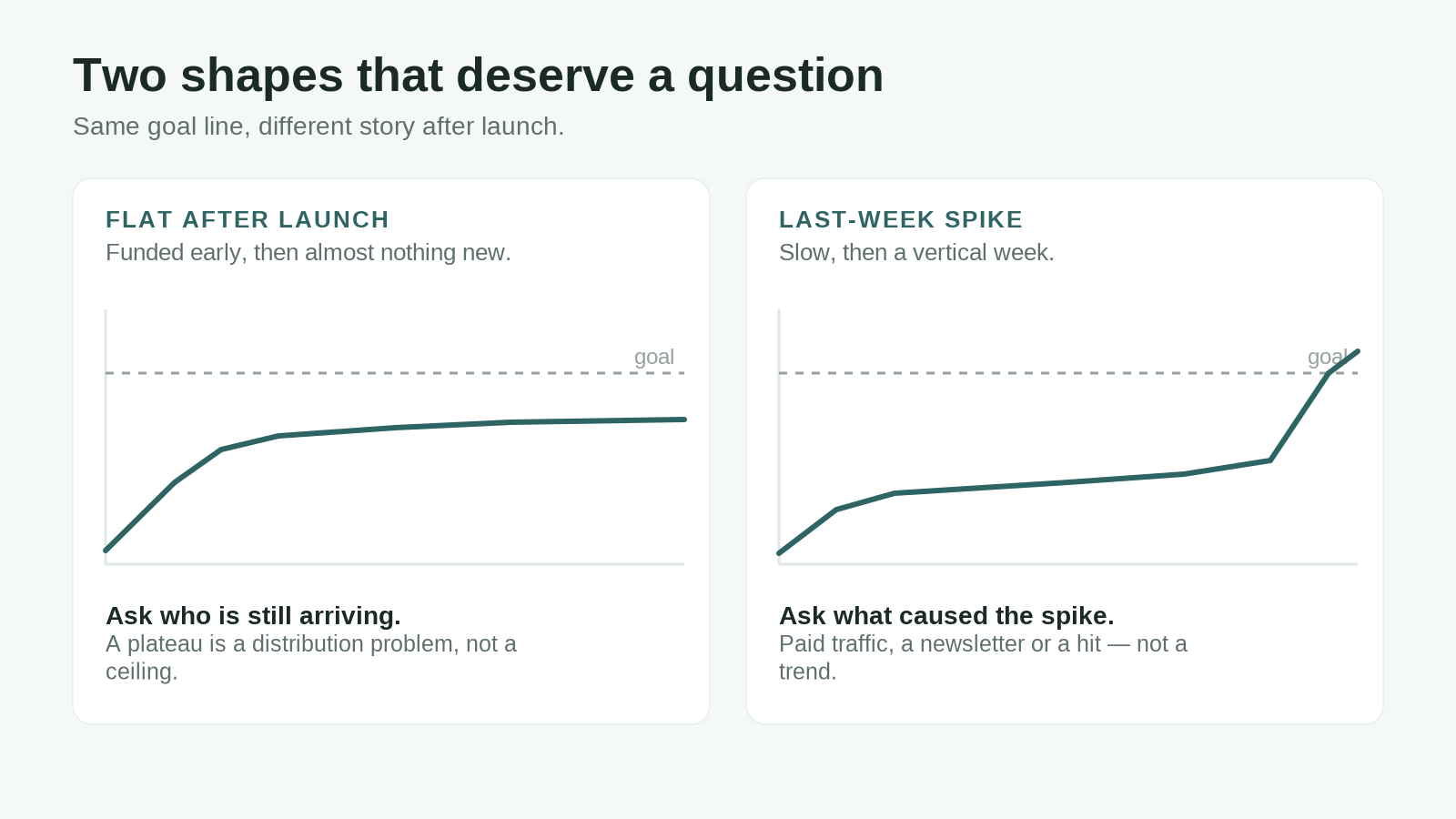
A flat line after launch. Most of a successful campaign's money arrives early. A campaign that raised its goal in week one and adds almost nothing afterwards is coasting on its existing backers, not attracting new ones.
A last-week spike with no story. Late surges are usually paid traffic, a newsletter or a press hit. Ask which; a spike with no answer is an expensive way to reach the goal.
What a red flag is not
A funded campaign is not a safe campaign, and a missed red flag is not a failure of the list. Every flag here is a question to ask, not a verdict. The rest of the reading method, including how to go through a page in ten minutes, is in how to read a Kickstarter campaign.
We read campaigns with a panel that groups the comments, audits the page and plots the curve: the extension is free to try. If you want to see how it compares with the other readers before installing anything, start with the four-extension comparison. And if you are building rather than backing, the goal arithmetic is in how to set a funding goal.