
How to read a Kickstarter campaign before you back or build one.
A campaign page is written to persuade. Reading it is the job of separating what it shows from what it leaves out.
Read a campaign in five layers: the copy, the reward ladder, the updates, the comment thread, then the funding curve. In that order, each layer takes about two minutes, and the last one is only trustworthy after the first four.
What the page tells you and what it hides
The page shows the offer, the price, the traction and the social proof. It is designed to make those visible and easy to grasp, and a well-built page does it in the first screen.
What it hides is the work: whether the prototype in the video is the one that ships, who is manufacturing it, what the schedule assumes, what happens when a component is late, and how the creator handles a question they do not want to answer. None of that is in the video, and some of it is not on the page at all — it surfaces in the comments.
The comment thread leads the curve
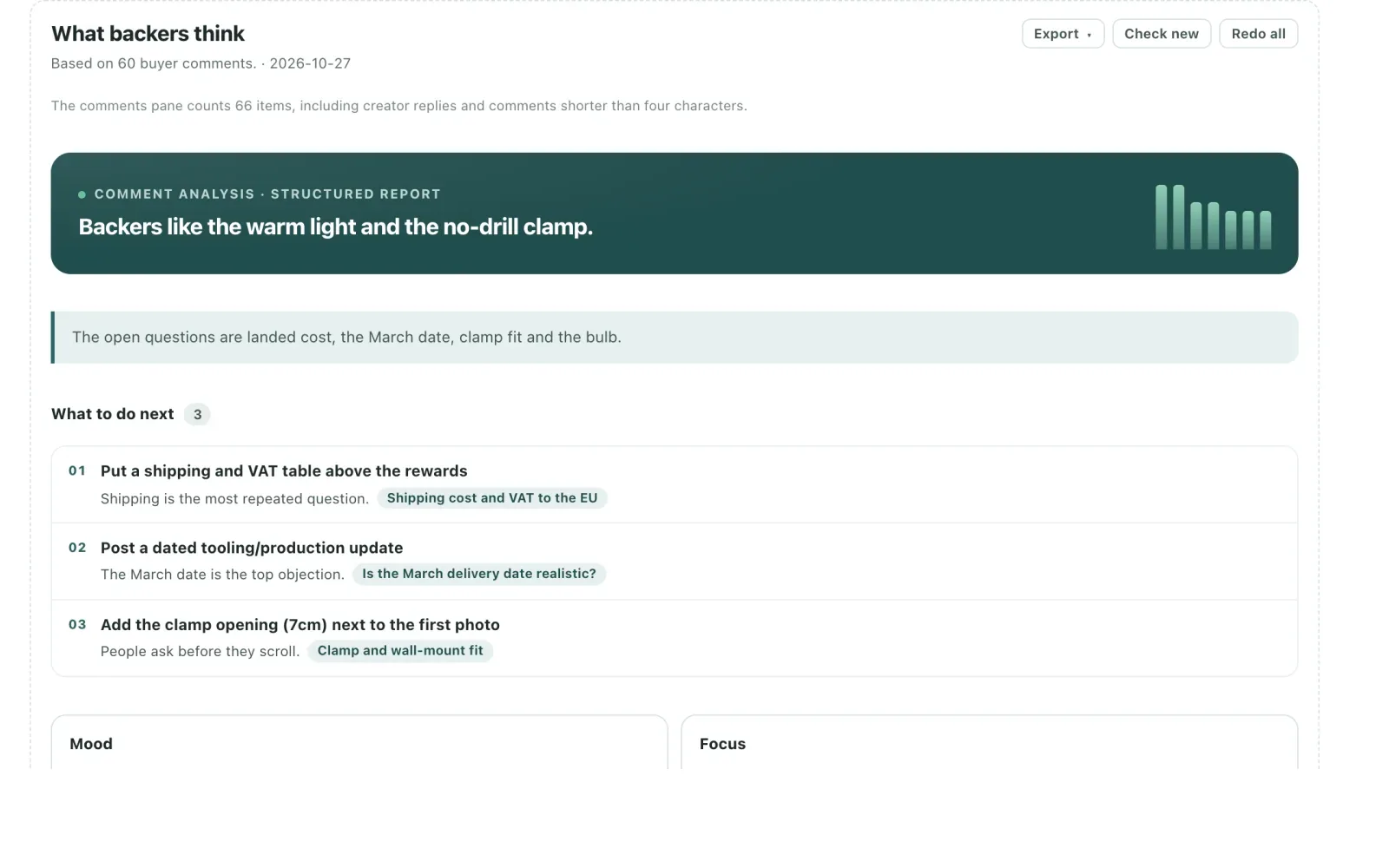
Backers ask about the same risks before the funding curve reacts to them. Shipping cost and duties, delivery dates, sizes, compatibility, the difference between a render and a prototype: these questions repeat in every category, and each one that goes unanswered is a backer deciding not to pledge.
Read the comments before the chart. A campaign can be at 120% of its goal and still be losing the argument in the thread, and a campaign that looks flat can be accelerating if the creator is answering fast and well.
A campaign walked through end to end
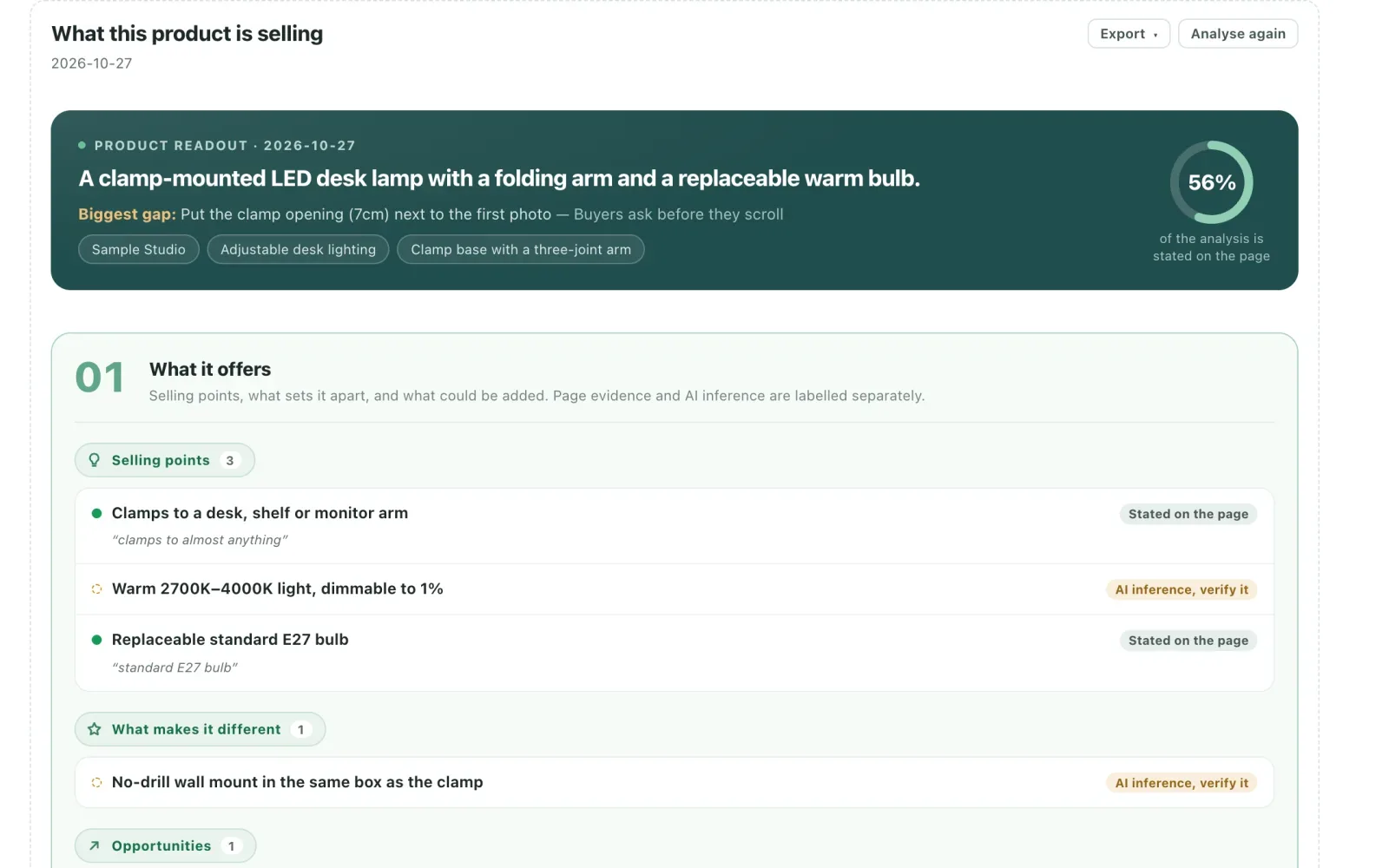
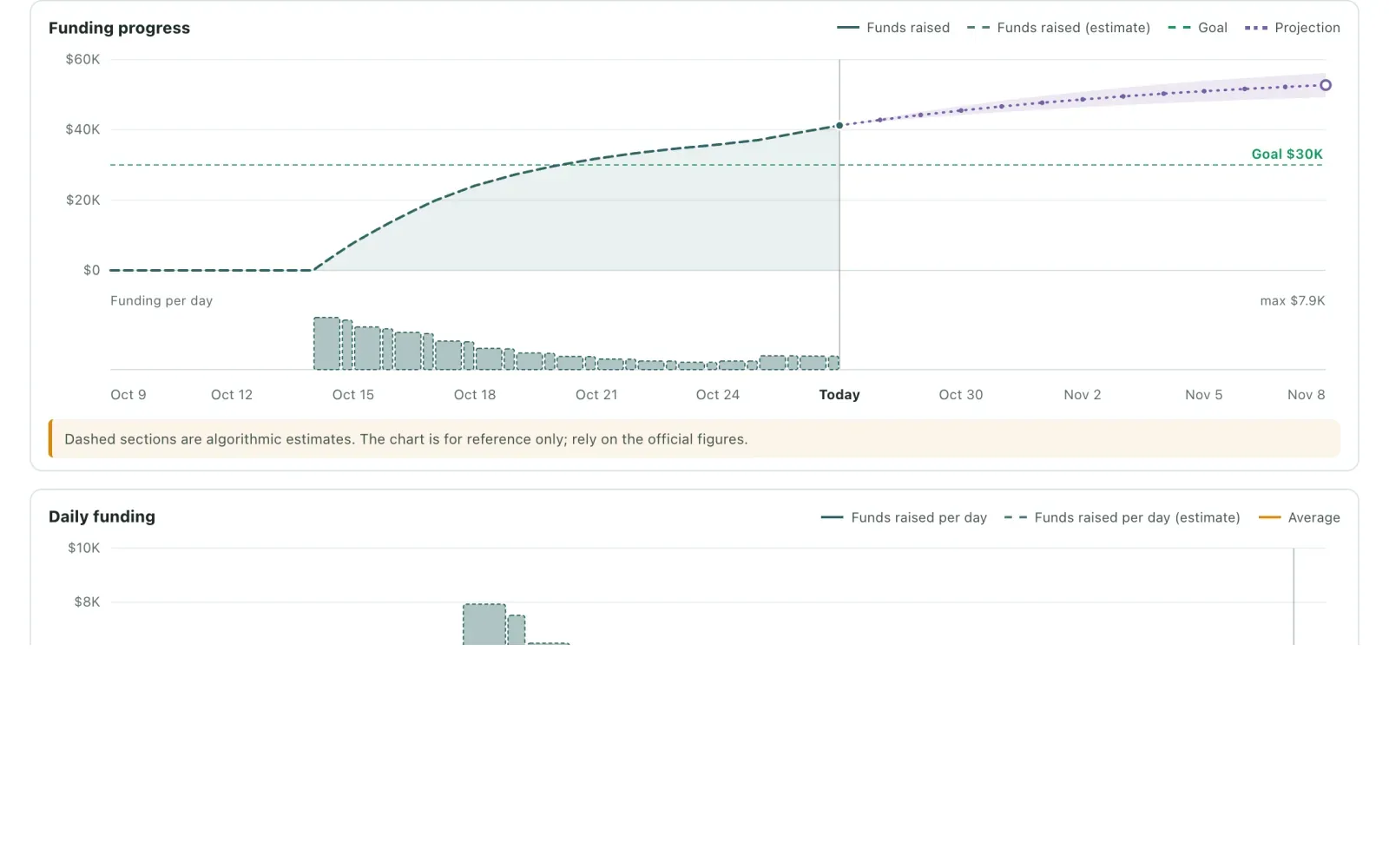
The panel below reads the same page a backer sees, then organises it. Three views cover the parts that are easy to miss when you scroll.
The five questions to ask before funding
- What exactly ships, and when? A prototype, a render or a production unit are three different promises. Look for a working sample and a delivery date with a month, not a season.
- What is missing from the page? Dimensions, materials, certifications, battery life, compatibility. A missing spec is not a lie, but it is a decision you are making without information.
- What did the creator answer, and what did they avoid? Read the replies, not just the comments. Evasion on shipping or tooling is the pattern that predicts a late delivery.
- What does the reward include? Shipping, duties, add-ons and the pledge manager are separate decisions. A cheap reward with expensive shipping is not a cheap reward.
- What does the curve imply? Funded in the first day is a different project from funded in the last hour. The first has momentum; the second has a story about why it nearly did not make it.
The reward ladder, in one minute
The ladder is where a campaign quietly tells you its economics. Read it from the cheapest tier up and ask three things: what the pledge pays for, what it does not include, and whether the price still makes sense if shipping and duties are added.
Early-bird tiers are a discount for speed, not a different product; check whether the regular tier later costs more than the early one plus shipping. A tier that bundles add-ons is a bundle price, and bundles usually hide the weakest item. And if the ladder jumps from a cheap thank-you tier straight to an expensive one with nothing in between, the project may be pricing for a small number of large pledges rather than a broad audience.
None of these is a red flag on its own. Together they tell you how the campaign was built: for a broad base, for a few committed backers, or after the fact.
Three common misreads
Funded means successful. Reaching the goal means the campaign collects; it does not mean the project can deliver at that number. A goal set below the real cost funds and then fails in fulfilment.
The goal was the budget. The goal is a threshold that includes fees, not a statement of what the project costs. Reading the goal as the budget makes every campaign look better funded than it is.
The comments are representative. They are self-selected, and the loudest thread is not always the biggest risk. Read for the questions that repeat and go unanswered, not for the mood of the last twenty messages.
What you cannot tell from the outside
No page proves manufacturing readiness, and no reading method does either. The comments are self-selected, the funding number says nothing about margin, and a polished video can sit in front of a factory that has not quoted the real unit cost. Reading a campaign well narrows the unknowns; it does not remove them.
Our own limit: the extension reads the page the browser has loaded. It does not contact factories, verify certifications or audit the creator, and its analyses say what the page does and does not say. The methodology spells out what is stored and what an analysis cannot tell you.
Read your next campaign in ten minutes
- Open the campaign page and read the reward ladder first, before the video.
- Open the comments and sort by newest; read the creator's answers, not only the questions.
- Check the funding curve against the goal: when did it cross, and is the last week flat or climbing.
- Only then watch the video, with the questions from the thread in your head.
If you want the three layers read alongside the page, install KickFocus — reading a campaign is free. To see how it compares with the other extension-side readers, start with the four-extension comparison. And if you are on the other side of the page, setting the goal rather than reading it, work backwards from the net number.
Read the comments before you pledge.
Comment analysis, page audit and the funding curve, in the panel beside the campaign.